Wednesday, October 24, 2018

I Am Not Your Momma

Inspired by the poem "I Am Not a Taco" by Santino J. Rivera and my amazing colleague/friend Mr. Steven Arenas! [You can read about the awesome lesson he created in the fantastic article he wrote, published in the Texas Education Review, by going here.]

2018-10-16
Phoenix, AZ

I am not your momma
I am not your cool older sister
I am not a saint or a martyr
I am not a bleeding heart
I am not a know-it-all
I am not quiet all the time
I am not always bossy
I am not unopinionated
I am not staying in all weekend
I am not grading your papers on vacation
I am not reading Shakespeare all the time
I am not always using perfect grammar
I am not always correcting other people’s spelling
I am not your free personal editing service
I am not only passionate about books
I am not a cat lady
I am not a culture snob
I am not clueless
I am not forgetful of what it’s like to be seventeen
I am not a preschool worker
I am not a magician
I am not a politician

I am none of these things
I simply am
           A teacher

Wednesday, October 17, 2018

Anne and Me

[A literacy narrative written for ENG 506]
4 September 2018
Tempe, AZ


Anne and Me

When I was eleven, my greatest wish in the world was to have red hair. Two of my
favorite heroines from the books I loved had red hair: the clever and intrepid Girl Detective
Nancy Drew and my personal favorite, the carrot-haired orphan, Anne Shirley from Avonlea.
The most exciting things, it seemed, happened to young women with red hair. To my preteen
mind, it seemed impossibly unfair that I couldn’t have red hair, too.

In those awkward years of transition from girl to almost adult, I generally preferred books
to people. I don’t have any memories of my parents reading to me as a child, but I do remember
the stack of Nora Roberts paperbacks on my mother’s nightstand and the rows of well-worn Tom
Clancy and John Grisham books on the shelves in my father’s study, which he would let me take
down and “play library” with or even try to read a few pages of closely-printed black type before
I lost interest. Our mother took my sister and me to the local public library nearly every Saturday
morning, and she would let us check out as many books as we wanted from any part of the
library, as long as we could carry them out ourselves. I loved the library: the smell of dust and
paper, the cool, dry air, the shadows between the tall metal shelves. I loved that my mother, who
rarely trusted us out of her sight in public, would let me wander off on my own between the
stacks, sometimes for hours, until I emerged juggling a too-tall pile of books in my arms, to find
the two of them waiting patiently on the wooden bench by the library’s front doors. Returning
home, I would spend the rest of the day in the cool semi-darkness of our sitting room, lying flat on my back on the couch, my stack of books piled precariously high on the coffee table at my
right elbow.

I’m not sure exactly what it was about L. M. Montgomery’s Anne of Green Gables series
that attracted me so strongly, but I do know that I read the whole eight-book series cover to cover
several times and watched the made-for-TV movies more times than I can count. Anne Shirley,
the orphan who was supposed to be a boy but managed to talk her way into staying anyway,
seemed to me a creature utterly different from everything and everyone I knew. I loved her wild
imagination and her romantic spirit, her devotion to her adopted parents Matthew and Marilla
Cuthbert, her loyal friendship to the girl next door, Diana Barry, and her hatred-turned-rivalry-
turned-friendship-turned-romance-turned-marriage with Gilbert Blythe, the clever, popular, and
kind boy who lived down the lane. I envied her courage and her ability (or curse) to speak
exactly what she was thinking, her capacity for dramatic, yet ultimately harmless escapades, and
her poise and wit under pressure. I was fascinated by Anne’s little country farmhouse, her idyllic
small town, the charming pace of rural life before cars and telephones. For a quiet, bookish,
Chinese American daughter of immigrants from Taiwan and Singapore, feeling stranded in the
suburbs in the dry, unforgiving heat of Arizona, Anne’s life seemed to be completely removed
from my own. And yet, I identified with how Anne’s over-vivid imagination sometimes kept her
from interacting properly with the people around her, how she found pride and validation in her
success at school, how she thirsted for words and books and knowledge like a parched woman in
the desert; I remember, like Anne, understanding what it felt like to be an outsider, too.

I’m still learning the numerous ways that Anne has impacted who I am as a reader, a
writer, a teacher, and a woman. As a girl, Anne taught me that a woman should be valued for her
brain more than her looks, but that it’s completely okay to want to feel smart and pretty at the same time. She taught me that real, lasting love of all kinds is less likely to be dramatic and
“romantical” than quiet and steady. She taught me about the power of education to change a life,
that reading and writing could help me build the life I wanted for myself. As an adult, Anne
reminds me to hold on to my childhood pleasure in imagination and stories, to see beauty in the
small, simple things, and to remain hopeful even in the darkest of circumstances. She reminds
me that even in the midst of great grief, there can still be room for great joy. As a teacher, Anne
reminds me to look beyond a student’s troubled past or tendency toward daydreaming or too-
intense emotions to the potential inside of them. She reminds me that books give us the
opportunity to step into the lives of people who may seem utterly different and yet turn out to be
remarkably similar to ourselves, and she reminds me of how powerful such experiences are for
young people in particular. Of course, reading (and watching) Anne twenty years later is a very
different experience. My adult mind, trained to analyze and critique and to notice what isn’t
being said in the spaces between the stories, recognizes that Anne’s world isn’t as perfect or
idyllic as it seemed to me when I was eleven. But even now, the remembrance of Anne’s joy and
warmth and spirit still lingers, as does my old, improbable, illogical childhood desire for red hair.

Wednesday, October 10, 2018

Writing Our Own Grand Stories

Writing Our Own Grand Stories
July 9, 2018
New York City

As a young child, I loved stories. My mother would take my sister and me to the public
library on Saturday mornings, and I would pull books down off the tall shelves like choosing
candy bars in the check-out lane—arms already almost too full, twitching fingers eager to caress
the smooth plastic wrappers, mouth practically watering. When we got back home, I would lie
flat on the couch in the front sitting room, away from all distractions, like my parents or my baby
sister or the murmur of the television, and read all afternoon, barely stopping to eat dinner when
called. I was usually ready to return to the library by Tuesday, but my mom was firm: library
visits were only for Saturday mornings. So I waited the next four days, famished, craving stories
until the next time I could glut myself on a feast of words.

I recognize now that I consumed these stories so voraciously because I had a deep
desire in my soul to be part of a Grand Story. The adventures I read in my books were full of
magic and adventure, quests and dragons and heroines who saved the day with their wit and
strength. My uneventful suburban life seemed incredibly boring in comparison. I was not an
orphan sent to live with a spinster and her brother in the countryside or an intrepid young private
detective with a blue roadster or even a bad-tempered tomboy with the soul of a writer, waiting
with my three sisters for my father to come home from war. I was just a quiet, bookish Chinese
American girl living in Arizona. Nothing of note ever happened to girls like me in places like
mine. And while I could see bits of Anne, Nancy, and Jo in myself, none of my favorite heroines
quite seemed enough like me for me to believe that I could be part of my own Grand Story one
day.

As a young teacher, I was told that what matters most when teaching is to focus on
skills. Students didn’t need to write their own narratives and poems; they needed to learn to
analyze and parse, to communicate clearly and effectively, not beautifully or creatively. I was
warned to stay away from personal narratives or poems: “There are some things about your
students that you don’t want to know,” they said. “What if they told you something you had to
report?” It was safer to keep a professional distance. “Really, by high school, they should be
past writing little stories about themselves, anyway.” I could maybe do some narrative at the
beginning of the year as a warm up to more complex writing assignments if I had to, but really, it
wasn’t worth my time. And poetry? Sure, they could write a sonnet or something if it would help
them to appreciate how difficult it is, but would the state test ever ask them to write a poem?
Never. It barely even asked them to analyze one. Better to spend my time on informational
texts. Besides, it would be unfair to grade a student on their “creativity”, anyway. Some people
just aren’t creative. That’s not what English class is about.

But I’m learning more every day about how stories, especially personal ones, inform my
life, whether or not I write them down. The stories I tell myself about my own life shape how I
understand my personal memories, my family history, and my cultural identities. The written and
unwritten narratives that the world tells about me as a woman, as an Asian American, as a
daughter of immigrants, as a teacher, as a person of faith—those all impact how I am perceived
by others and how I interact with the world. I need to listen to and comprehend those narratives
so that I can learn to navigate them well. And, perhaps, if there aren’t enough stories about
people like me, it may be my job to write them.

What is true for me, in this case, is also true for my students.

The stories they tell themselves about their own lives absolutely affect how they perceive
their own human worth, their place in the world, their relationships with their friends and families,
and their goals for their own present and future. Although many of them have significant social,
academic, financial, and emotional challenges, I am regularly inspired by the goals, dreams,
and ambitions of my students as they navigate school and work and family and friendship and
life.

The stories the world tells about them are more problematic: immigrants, children of
immigrants, Hispanic, Black, Native American, multiracial, Generation Z, female, male, foster
children, residents of low income neighborhoods, non-native English speakers, first generation
college students—often it feels as though the stories the world tells about my students can be
unrelentingly negative, or at least disconcertingly monolithic. While literature for young adults
has come a long way in recent years, it is still difficult for many of them to find stories they can
see themselves in, to help them believe that they, too, are part of a Grand Story.

Since those early years of teaching, I have come to recognize the necessity for making
space inside and outside of our classroom for my students to tell their own stories and to take
back their narratives. I’m not absolved from this responsibility when I find small pockets of time
in my overpacked curriculum to do a “fun project”; my work as a teacher for social justice is to
find a way to make it the center of our work together. I want my students to believe that their
stories about their lives are valid and meaningful, that their experiences may be personal and
individual, but they also have much in common with others. Because the stories we tell about
ourselves and about others truly do make a difference, not only in how we see ourselves and
our place in the world, but how we see those in the world around us.

Empowering my students to stand up for justice and make positive change in the world
must start with empowering them to tell their own stories and to listen carefully to the stories of
others. Whether these stories take the form of poetry, narrative, survivor testimony,
documentary film, oil painting, expression of faith, or musical performance, stories are the first
step toward connecting us to each other and to the larger narrative of our communities and our
world. When my students and I write and share our own stories, we become part of the
narrative. We write our own Grand Stories together.

Wednesday, September 26, 2018

"How did you write what you wrote?"

June 23, 2018
New York City


How did I write what I wrote?

Settling in.
A folding chair. Notebook open on the table in front of me.
Water bottle set just so. Pen in hand.

I take a breath.
A beat.
Another beat.

What will I do if the words won't come?
Will I just sit here forever,
awkward in silence,
eyes watching the page
like students waiting for the last bell of the day?

An opening phrase flits through my mind

and I pin it down with my pen.

Wednesday, September 19, 2018

A Fragment

June 19, 2018
New York City

A Fragment.

Perhaps to be human is the impulse
to give love and seek love
beyond expectation of return,

hands reaching out, fumbling in the dark,

one last gasp of hope,

again,

again,

again.

Wednesday, September 12, 2018

Written on the Third Floor of the Museum of Jewish Heritage

June 18, 2018
New York City

Written on the Third Floor of the Museum of Jewish Heritage

Air. Space. Quiet echoes.

The view of the water and
the Statue of Liberty across it

Room to breathe and reflect

Room to make sense and make space

Room not to let go, but to hold loosely
a fragile thought pulsing with life

like an egg in the palm of your hand
or a bird
or the promise of wings.

Wednesday, September 5, 2018

Where I'm From, Version C

June 17, 2018
New York City

Where I'm From

I'm from saguaro cactus,
    from the prickly pear I scurried past
    on my way home from the bus stop.

I'm from digging holes in the backyard,
    from ground so hard and dry
    I had to drown it to make it yield.

I'm from white rice, from egg noodle soup,
    from dim sum and barbeque pork buns.
I'm from tacos, from chorizo,
    from horchata and limonada.

I'm from the jobs my father worked
    to put himself through college.
I'm from the English my mother learned
    to get along in a new country.

I'm from perms, from scrunchies,
    from Mommy brushing my hair too hard.

I'm from day trips to the White Mountains
    to play in the snow, then driving back
    to the desert heat by evening.

I'm from sheet music, from music stands,
    from Mommy's piano in the sitting room.
I'm from singing along to the Bee Gees with Daddy in the car.
I'm from piano lessons, from music competitions,
    from recitals at the mall.
I'm from stuffing my flute case into my backpack for school
    then carrying it home again.

I'm from books, from stacks of papers,
    from students' handwritten thank you notes.
I'm from Saturday mornings at the library
    and Saturday afternoons reading
    on the living room couch.
I'm from Nancy Drew and Anne of Green Gables
    and Encyclopedia Brown and Meet Felicity.
I'm from stealing paperback romance novels from my mom
    and John Grisham thrillers from my dad.
I'm from reading to my sister on the bottom bunk after bedtime,
    huddled together, a cocoon
    of blankets and words and love.


Wednesday, August 29, 2018

Once More, With Feeling

My childhood is littered with abandoned journals.

My inordinate love of books has long been a defining characteristic of mine, and so I suppose it is only natural that when my various loved ones are looking for a non-book gift for someone who loves words, well, it's quite frequently a blank journal.

Like many bibliophiles and school nerds, I also harbor a (slightly un)healthy, long-standing passion for stationery, and so I delighted in each of these gifts. Lined, blank, spiral-bound, book-bound, hardcover, softcover--I loved them all.

The trouble, for me, has always been filling them.

Perhaps it was that dreaded paralysis of the blank page, perhaps it's my unfortunate habit of leaving large projects unfinished, or even my brain's maddening need for regular novelty, but, invariably, I would start each of those notebooks with the best of intentions. I would write two or three really solid entries, then log in a couple of half-hearted attempts, then I would leave the rest of the journal blank, never to be filled. Eventually, the notebook would get lost under a pile of clothing or shoved beneath my bed, unused and forgotten.

When I eventually unearthed each of those barely used notebooks months or even years later, each one felt like a failure. What did it say about me, that I couldn't manage something as simple as keeping up with a journal?

I think more than anything else, it was this inability of mine to maintain a consistent writing habit that caused me to believe that I would always be just a reader, not a writer. Didn't writers need to write, like breathing? Didn't the words rush through their veins, like a river in flood, desperately searching for an outlet? I must not have had whatever special compulsion it was that those people, the real writers had. I didn't have that need, or that Gift.

But I am slowly learning that it isn't a constantly accessible, always replenishing flow of words that defines a writer, but the determination to keep picking up that pen or pulling that keyboard closer and trying again, no matter if it has been two hours or two years.

So it goes with this blog. Thanks for sticking around.

Tuesday, June 20, 2017

Poem: Signs of Life


Written on a "writing marathon" walk around ASU campus during CAWP Summer Institute.

2017-06-14

Signs of Life
I do not always know their names
But the shapes are familiar
Baked into my childhood memories
By years of sun and heat:

Wide, flat paddles covered in spikes
Tinged purple at the edges

Clusters of tall spears
Bursting in all directions like fireworks

Dusty green limbs, a folded lady’s fan
Stretching up and out like fingers toward the sky

Low wide barrels, ridges and valleys lined with needles
Always squatting alone

While their taller cousins reach long arms toward their neighbors
But also up and up toward cloudless, unrelenting blue.

Sunday, June 18, 2017

Where I'm From, Part B

2017-06-13

Where I’m From, Part B

I am from dirt and rock
And slowly withering grass—
“Desert Landscaping”.
I am from the overgrown oleander bush
Standing guard beneath our front window—
Look, but don’t touch.

I am from too-big gardening gloves,
From pulling weeds in the yard with Daddy
And ice water after, tooth-achingly cold.

I’m from tacos and dim sum,
Hot tea and cool salsa,
Tamales and fried rice.

I’m from Chinese nursery songs with Grandma,
And English ones from PBS,
From Daddy’s cracked hands
And Mommy’s curly brown hair,
From staying up too late reading books to my sister
In the bed whose bottom bunk we shared
And filled the top with a zoo of stuffed animals.

I am from music, always, everywhere,
From piano, trumpet, flute, stereo, television, and portable sing-along cassette player,
From boy bands and hymns, the Bee Gees and Disney,
From “Peace Like a River” and “Hit Me Baby One More Time”,
From singing and listening and playing and rehearsing
and spontaneous bursts of song like uncontained joy.

Friday, June 16, 2017

IT'S ALIVE!

I know I literally haven't posted in years, so please be warned: post-CAWP deluge of posts coming (or maybe a small stream at least)! Scraps of poems, essays, little writing sketches. I think it's time to start posting again.

If you're reading this, bless your heart. You are a better friend than I deserve.

Thursday, January 15, 2015

Language and Magic

Some (perhaps slightly out-of-context) thoughts on language and magic: 

"If there’s a single lesson that life teaches us, it’s that wishing doesn’t make it so. Words and thoughts don’t change anything. Language and reality are kept strictly apart— reality is tough, unyielding stuff, and it doesn’t care what you think or feel or say about it. Or it shouldn’t. You deal with it, and you get on with your life. Little children don’t know that. Magical thinking: that’s what Freud called it. Once we learn otherwise we cease to be children. The separation of word and thing is the essential fact on which our adult lives are founded. But somewhere in the heat of magic that boundary between word and thing ruptures. It cracks, and the one flows back into the other, and the two melt together and fuse. Language gets tangled up with the world it describes... Can a man who can cast a spell ever really grow up?" 

from The Magicians by Lev Grossman

Monday, September 22, 2014

Adventures in Educational Crowdfunding!

I know it's been literally months since I posted, sorry, sorry.

I just wanted to pop out of my teaching/planning/grading hole to promote my DonorsChoose.org project. You can support our classroom by clicking HERE!

Help me put quality literature into the hands of my 11th graders!


Mindy Kaling (my favorite Hollywood person) supports Donors Choose! 
(as if I needed more reasons to love her!)

Thursday, May 8, 2014

YA Lit Review: Divergent by Veronica Roth

Another old book review from Goodreads. Does posting three times in one day make up for not posting for months? Maybe?

-------------------------------------------------------------------------------------------------------------------
Divergent (Divergent, #1)Divergent by Veronica Roth
My rating: 4 of 5 stars

Not wildly original or remarkably well-crafted, but this book totally sucked me into its orbit for the four days it took me to read it. Already bought the sequel on Amazon! (Two day shipping suddenly seems horribly slow...) Tris Prior makes for a tough-yet-sympathetic and engaging heroine, but I'm having a hard time with Four. Maybe I'm too old (or cynical?) to have patience for boys who run hot and cold, even if they are super dreamy. Impatiently waiting for book 2 to get to my house...

View all my reviews

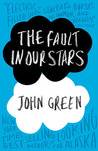
YA Lit Review: The Fault In Our Stars by John Green

This is a bit old, sorry... 
 ------------------------------------------------------------------------------

 The Fault in Our StarsThe Fault in Our Stars by John Green
My rating: 5 of 5 stars

Smart, beautiful, and heart-breaking. I teared up while reading this during SSR time, hoping my 3rd period students wouldn't notice me sniffle. This book has such smart, insightful things to say about the nature of living and dying, the way we treat people with cancer and other terminal illnesses, the purpose of literature, and the beauty of first love and all the other kinds of love, too. I can see now why my students are obsessed with John Green. Bravo, sir.

View all my reviews

YA Lit Review: Miss Peregrine's Home for Peculiar Children by Ransom Riggs

Miss Peregrine's Home for Peculiar Children (Miss Peregrine's Peculiar Children, #1)Miss Peregrine's Home for Peculiar Children by Ransom Riggs
My rating: 5 of 5 stars

This book was fantastic! I LOVE the kooky/creepy vintage photos, and Riggs pulls together a pretty fascinating story. Sometimes the mythology he created gets a little confusing (and I still haven't figured out how to pronounce "ymbryne"), but the crazy-fun cast of characters he put together more than makes up for it. I didn't really care for Jacob's family much (which I guess is sort of the point), so I'm hoping the sequel fully dives into the relationship Jacob is developing with the rest of the peculiar children. I also have to confess that I totally didn't see that twist at the end--should I have?

I have so many spoiler-ific questions now... (view spoiler)

I'm so glad there's a sequel already!

View all my reviews

Friday, February 14, 2014

YA Lit Review: Code Name Verity by Elizabeth Wein

Code Name Verity (Code Name Verity, #1)Code Name Verity by Elizabeth Wein
My rating: 5 of 5 stars

In 1943, during the dark days World War II, a British spy plane is forced to make an emergency landing in Nazi-occupied France, its pilot and single passenger stranded on enemy soil with little hope for rescue. That these two managed to survive such a dangerous foray into enemy territory is enough to call them brave men indeed, but to do so might be inaccurate: the two agents conducting this critical spy mission into hostile territory were, in fact, women. Code Name Verity tells the story of how these two best friends became players in a covert operation that could turn the tide of the entire war and what happens when they find themselves in a situation that will test their honor, their courage, and their friendship.


Code Name Verity is a twisty mind-bending book that sucks you in and then proceeds to surprise you again and again, a gorgeous soul-grabber of a novel. Reading this wrecked my brain and my heart. The history-lover in me cheers, the feminist in me dances, and the part of me that adores a piece of well-crafted writing is just astounded. I simply love clever, intelligent writing like this that doesn't lose its beating heart underneath the brain. I found myself flipping back and forth between the pages feverishly to find clues that I had missed

Anyone who likes exciting, action-packed stories will like this book, but especially people who love historical fiction or stories about war, airplanes and their pilots, or espionage.

View all my reviews

POEM: Untitled Quote Poem

Today we wrote "quote poems," which basically means that students choose a famous-ish quote to repurpose as the first and last line of their own original poem. We recently read "So We'll Go No More A-Roving" by Lord Byron, so we talked a little bit then about why/how Bryon would borrow the lines of a Scottish folk song about a wandering, maidenhead-stealing "jolly beggar" to start of his own poem about how aging eventually forces all hard-partiers to slow down. (Bryon was 29 when we wrote this poem, so I am REALLY looking forward to this exciting stage in my life...)

In honor of Valentine's Day, the topic of the day was love, in its many forms (romantic, familial, disappointed, unrequited, joyous, even taco-based).

Mine is based off an Emily Dickinson line: "For love is immortality."

------------------------------------------------------------------------

For love is immortality--
A chance to be greater than
Our frail, weak bodies
An opportunity to make
A mark, a stain, a fingerprint
On the glass globe of universe.
We live in the memories of
    those we loved and
    those who loved us
And that love is passed from life to life--
A precious candle flame, cupped in trembling hands,
A blazing inferno whose skin-searing heat singes even from a distance
A glowing ember hidden under dusty, cold ashes, stubbornly refusing to go out--
For love is immortality. 

POEM: Liar, Liar

I know, I know... "Wait, she's still writing in this thing?" 

I've been horribly remiss in posting here, but I was re-inspired to write more in my hard-copy teaching notebook by a recent CAWP Saturday workshop, and so I have more material to use here. 

Also, now that we're studying poetry in my English 11 classes, I've instituted writing Fridays, and I'm trying to write a poem or two for each prompt as a model for my students. 

I also have a book review or two to post as I've been reading a lot of YA lit recently, so, keep an eye out for those posts soon, I guess, if that's your thing. 

Enough babbling. Here's some poetry. 

-------------------------------------------------------------- 

Last week we read "One Art" by Elizabeth Bishop, which is one of my favorite poems. EVER. (Look it up if you don't know it. Please!) In response, I asked the students to write a poem which used a similar trick to hers, using hyperbole and irony to show the reader that everything stated in the poem is actually a lie. "The art of losing isn't hard to master," she says, but we (and she) know better. 

I asked the students to write a poem that included at least five lies about themselves. Some of what they wrote was really fantastic--open and honest (well, you know) and well-crafted, experimenting with rhyme and repetition and form. Success! 

At any rate, here's mine: 

LIAR, LIAR 

I am the perfect daughter-- 
     I never disappoint my parents 
     or disagree with them. 

I am the perfect sister-- 
     I am never selfish or petty 
     or thoughtless of her feelings. 

I am the perfect teacher-- 
     I always have my lessons prepared weeks in advance 
     and I never fall behind on grading papers. 

I am the perfect friend-- 
     I never whine about one friend to another-- 
     and I am the best at keeping in touch. 

I am the perfect writer-- 
     I never run out of ideas 
     or get frustrated when choosing the right words to use. 

I am the perfect liar-- 
     even I believe 
     all the things that I say.

Friday, November 22, 2013

YA Lit Review: The Maze Runner

The Maze Runner (Maze Runner, #1)The Maze Runner by James Dashner
My rating: 4 of 5 stars

In The Maze Runner, Thomas finds himself trapped in an enormous maze with dozens of other boys and none of his memories of his pre-maze life except his name. It is an interesting premise, and I like how the author shows the little society the boys have created for themselves inside The Glade, complete with government, economy, and their own slang. I would imagine this would be a pretty good book for boys, but it does skew more middle school than high school, I think. The monsters in the maze (Grievers) are too fantastical to be truly frightening; the really terrifying question is why the boys are there in the first place and what ending of the book reveals about the truth of their circumstances. I am curious to see where Dashner takes this story in the next book.

View all my reviews

I Am Not Your Momma

Inspired by the poem "I Am Not a Taco" by Santino J. Rivera and my amazing colleague/friend Mr. Steven Arenas! [You can read about...